
About the Hall
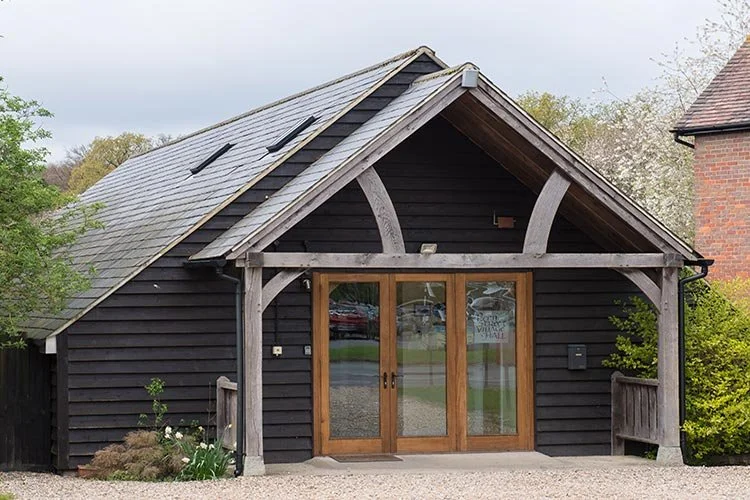
Although our village hall may look old, this is actually the third hall to stand on this site. The current hall was only built in 2008 thanks to a campaign led by the villagers.
History
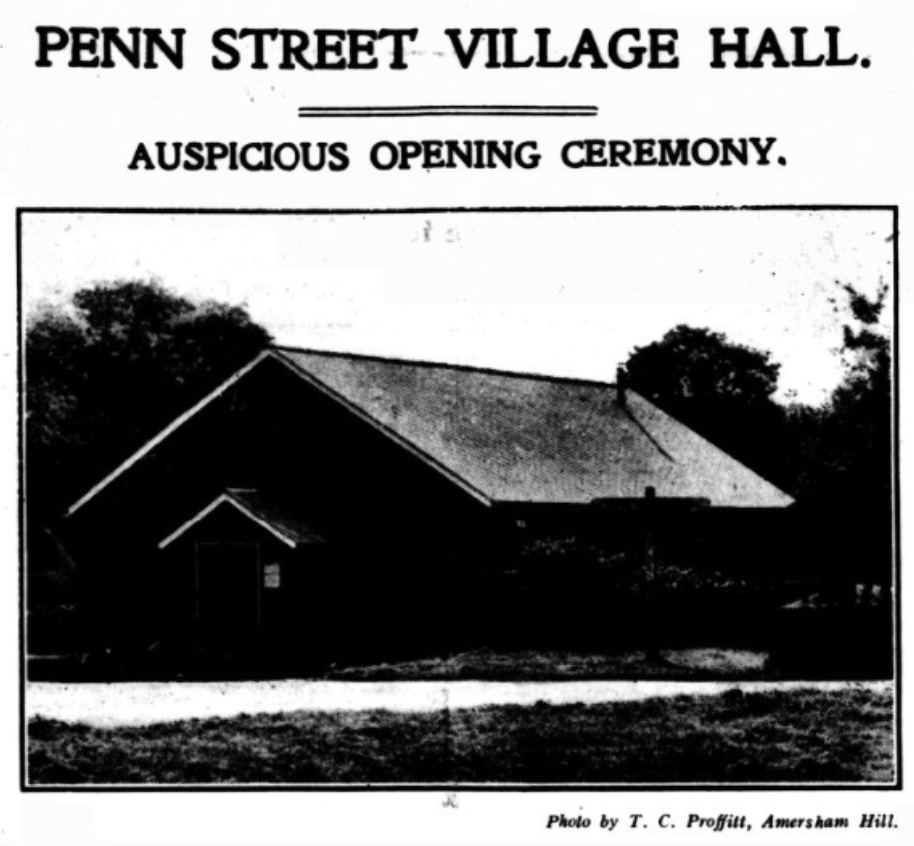
We know from a newspaper article that appeared in The Bucks Examiner in September 1928 that the original hall was declared open on Wednesday 26th September by Lady Burgoyne, wife of Sir Alan Burgoyne MP for Aylesbury.
She performed the opening ceremony in the company of Earl Howe, Lady Edith Franklin, the Reverend A. Browning (former vicar of Penn Street), the Reverend E. M. Davies (the new vicar at the time) and Messrs Alfred and Cecil Hearne who were secretary and treasurer of the hall committee.
The article goes on to tell us that it was in 1919 that Rev. Browning first voiced the suggestion of a village hall, and that by means of collections and entertainments organised by the villagers a constant stream of money had flowed in.
A villager at the time, Alice Timms, kept a diary recording such events and we have an entry dated November 1923 which shows how the matter was progressing.
“There is a movement on foot to set up a Village Hall in Penn Street and Lord Howe has most kindly offered us a site for this purpose on the edge of the wood adjoining the green. The hall will thus be available for use as a cricket pavilion in the summer as well as a clubroom and place for entertainments and meetings in the winter. Steps are being taken to obtain an Army Hut and we hope shortly to come to some definite decision and lay the proposal before a general meeting.”
We know from Alice’s records that the villagers needed to raise the necessary funds:
February 1924 : “A wonderful entertainment organised entirely by children was given in the Penn Street School. On December 28th and 29th the performers were O& K Stevens, V & F Smith, M & C Hearne, A & E Hatt and G.Nieles and Miss G.Hearne played the piano. There were seven little plays given besides recitations, pianoforte duets and solos and dances. There was a crowded audience on the first night and quite a good one on the second and the result enriched the funds for the Village Hall by no less than £7. Great praise is due to the enterprise of our young friends and their promising abilities lead us to expect great things from them when the Village Hall is actually built”.
The fundraising continued, and on 26 June 1926 a Village Fête was held at Penn House. The programme lists country dancing, recitations and sport amongst the afternoon’s activities, with dancing on the lawn to the Crotchets Jazz Band. In 1927, Sir Alan and Lady Burgoyne held another fête at their home in Beamond End, raising a further £146 towards the £800 needed for the construction of the new hall.
Building commenced in 1928 by George Biggs and Sons of Great Kingshill, providing a main hall with stage, kitchen, offices, and dressing rooms at the rear.
In January 1929, a conveyance between The Right Honourable Richard George Penn Earl Howe, Guardian Assurance Company Limited, Reverend Ernest Montague Davies, and Alfred Hearne released and extinguished the land from mortgage and was to be held in trust in perpetuity under the name of Penn Street Village Hall.
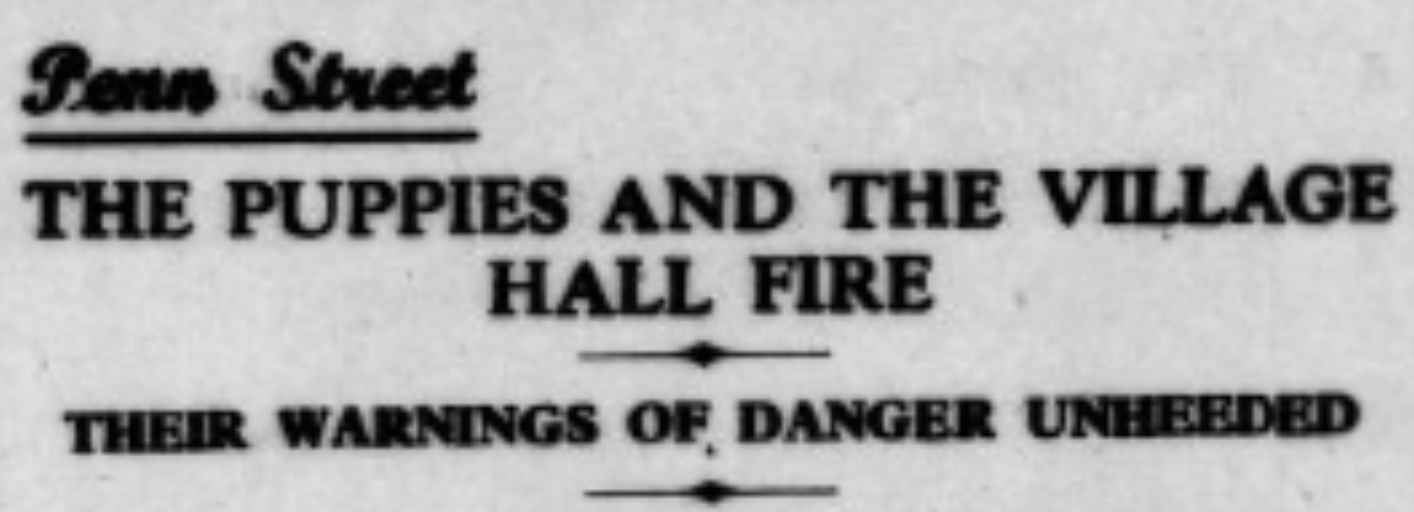
This first Village Hall, which had played an important role in entertaining the troops with concerts and dances during the Second World War, burnt down on 30 July 1948.
So for the second time funds needed to be sourced for a replacement hall.
In 1953, after obtaining planning consent, the villagers acquired an ex-MOD hut at a cost of £4,000, which Lady Curzon opened on the 24th October. In 1955, a small kitchen extension was added and in 1982 a further extension was built to provide improved toilets and showers for the cricket club.
The main hall was constructed from asbestos panels supported by hollow pillars and beams made from plywood. Over the years the glues used in the plywood supports had started to degrade and the box beams supporting the flat roof became structurally unsound. During heavy rains in April 2000 a large section of roof collapsed.
Props had to be used to support the remaining structure and Brian Bate from the cricket club who ran his own scaffolding firm kindly encased the hall with scaffold to support a temporary roof.
The Committee considered the possibility of repair but decided due to the poor quality of the building it would be prudent to start all over again.
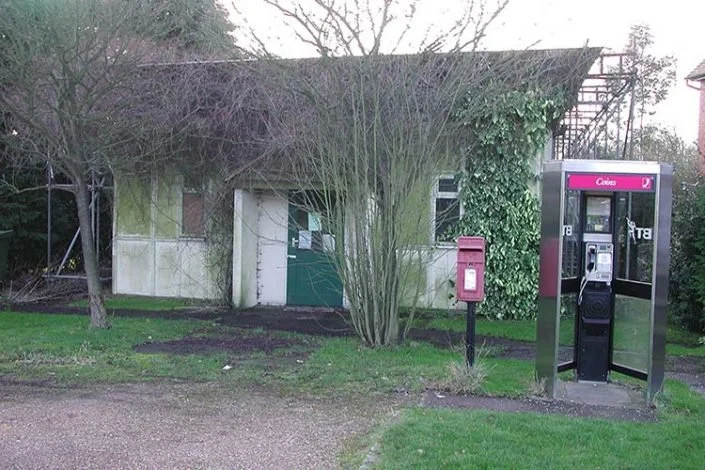
The second hall from the outside
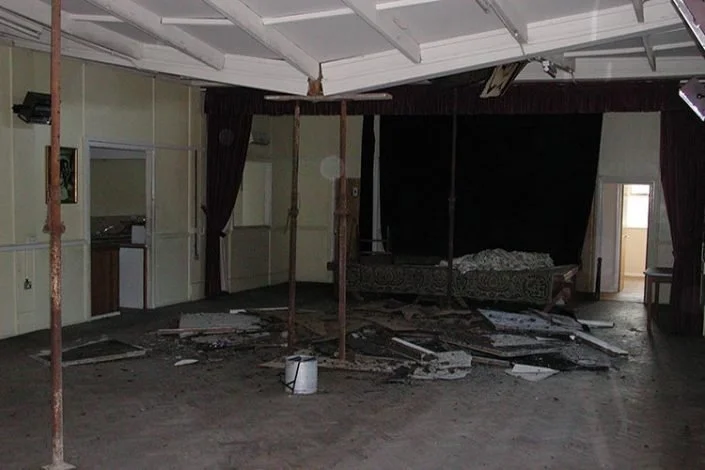
The roof collapses
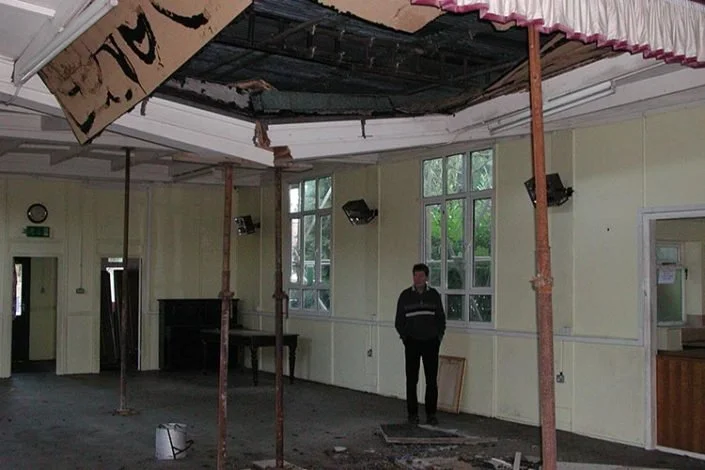
Surveying the damage
Another cricket club member, Colin Parry, an architect, was asked to draw up plans along with costings, and planning approval was eventually obtained in 2003. The estimated rebuilding cost was £263,000 - way beyond the pockets of the villagers, so the Committee applied for a grant from the Lottery Fund and registered the village hall with the Charities Commission to secure funding.
Meanwhile, maintenance and insurance premium costs for the old building continued to eat into the funds that the Committee had already raised, so an application was made for consent to demolish the building. Chiltern District Council refused consent on the grounds that by doing so it would leave a gap in the “street scene” which would not enhance the conservation area and also that funding for the rebuild should first be secured. The Committee immediately lodged an appeal with the Secretary of State and seven months later approval was granted to demolish.
As the hall contained asbestos, demolition required a specialist contractor at a cost of £5570. Penn Parish kindly donated £5000 towards the funds required. There was a further setback to the project when the Committee learned that Colin Parry had died.
In February 2004, after the Committee received notification that the Lottery application was unsuccessful, they decided to ditch the proposed new build and look at cheaper options. John Arnold of Forge House suggested a more traditional style of building and approached English Heritage Buildings for designs. Their estimated cost for a suitable oak timber framed hall was around £103,000, exclusive of groundworks/foundations and internal fitting out. Estimates for these works put the total rebuild at a much more affordable £190,000.
A second application was made to the Lottery Fund and also to DEFRA ,BIFFA and other sources. These included Penn Parish Council, Bucks CC, Chiltern DC, Awards for All, Microsoft, Foundation for Sport and Arts, and Penn Street Cricket Club. Villagers also pledged monies and various events were held to boost funds.
A second planning application was made for the new design and once funding had been secured the work started in spring 2007 and was completed in April 2008:
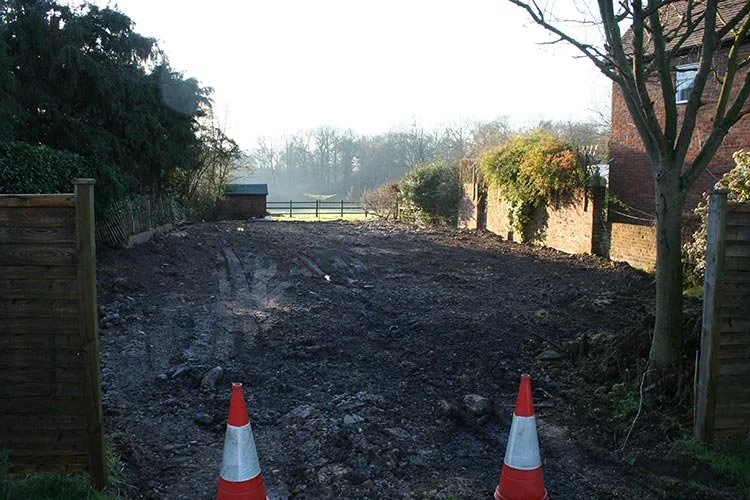
The site is cleared
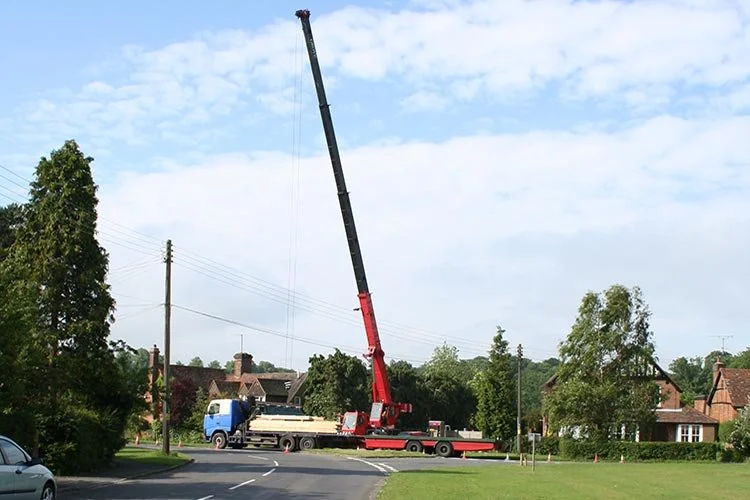
The timber is delivered
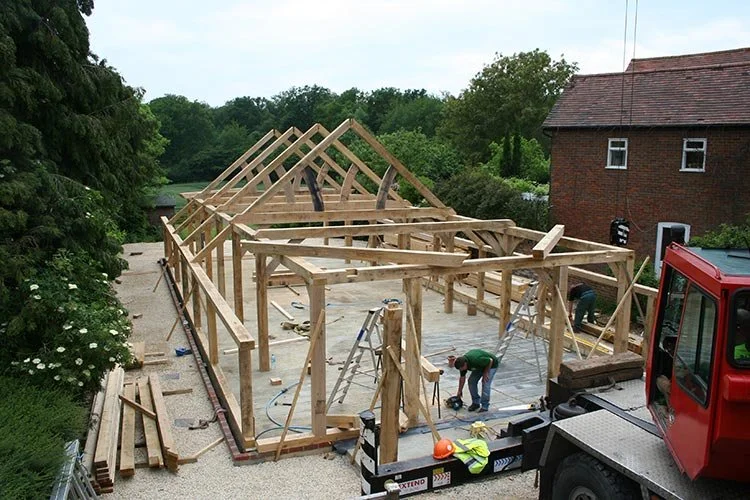
Framing begins
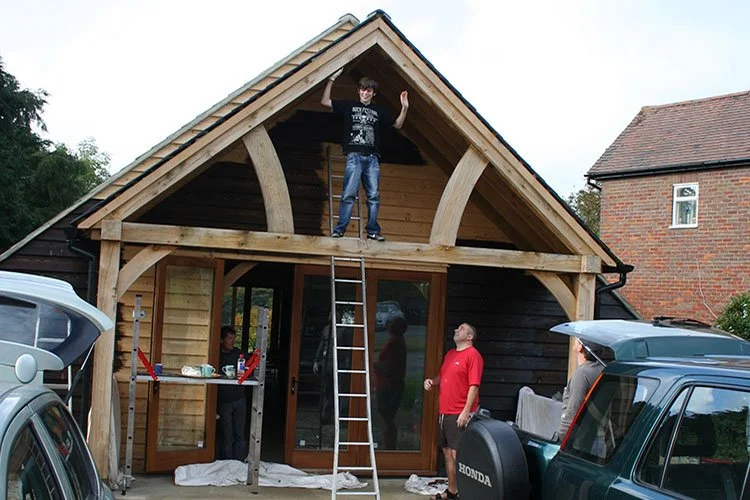
The building takes shape
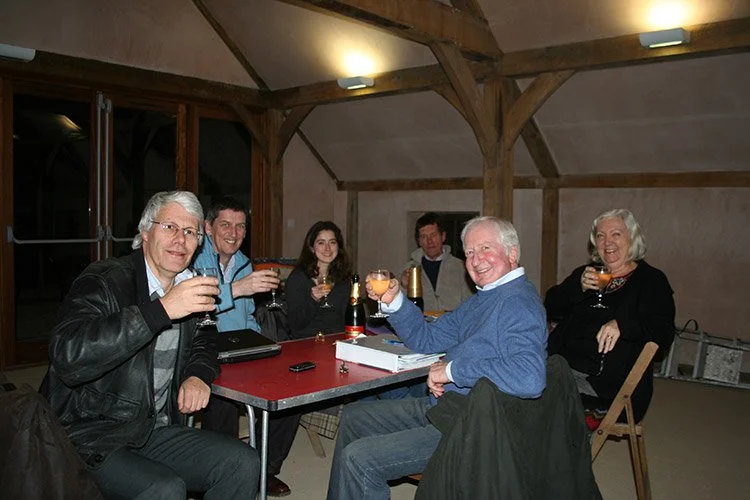
The Committee holds its first meeting in the hall
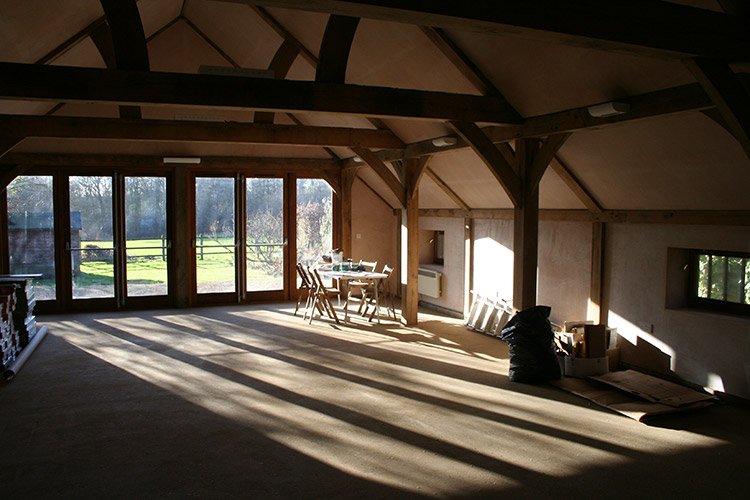
Interior decoration is completed
The Hall was officially opened on the 7th June 2008 by the Earl Howe followed by a day of celebrations.
The Village Hall Trustees at the time of re-opening were: The Earl Howe, David White, and Reverend William Mason.
The Village Hall Committee members at the time of re-opening were: Simon Hennell (Chair), Charles Huff (Treasurer), Phil Cross (Secretary), Mike Seller (Buildings), Sue Taylor (Project Planning/Funding), Rhiannon Lawrence (Events/Funding), and Carolyn Bourne (Lettings).